
The Mobley v. Workday Ruling Just Changed AI Hiring Liability: 5 Steps to Screen Candidates Without Bias
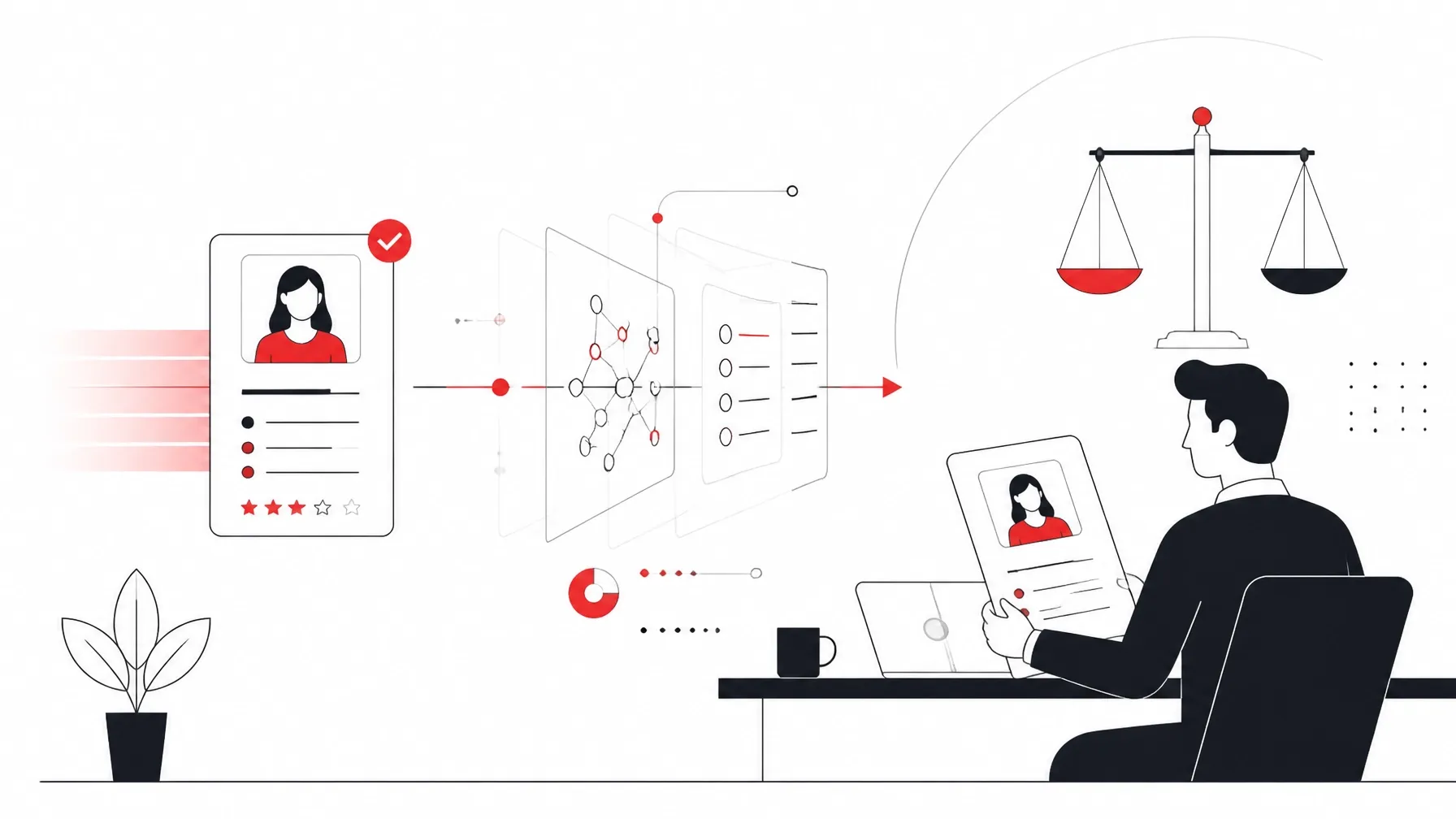
Artificial intelligence is changing how employers source, rank, and screen candidates. It is also changing who may face liability when those systems produce discriminatory outcomes.
On June 22, 2026, the U.S. District Court for the Northern District of California issued a significant ruling in Mobley v. Workday, Inc., Case No. 3:23-cv-00770-RFL. The court allowed key claims involving algorithmic hiring tools to proceed, including claims under California’s Fair Employment and Housing Act (FEHA) and an Americans with Disabilities Act (ADA) theory based on proxy discrimination.
The ruling does not establish that Workday is liable. It does, however, make one point clear: Companies that design, operate, or rely on AI hiring systems cannot assume that software vendors are legally insulated from employment discrimination claims.
For law firms, corporate legal departments, and staffing providers, responsible screening is now a core risk-management function. Here are five practical steps to take.
What the Mobley v. Workday ruling means for employers
The case centers on allegations that Workday’s algorithmic tools screened, scored, ranked, and rejected applicants based on criteria that created disparate effects relating to race, age, sex, and disability.
Judge Rita F. Lin denied Workday’s motion to dismiss the FEHA claims. The plaintiffs had alleged that Workday’s tools were designed, developed, maintained, and controlled from California, and that applicant screening and rejection decisions originated from California-based operations.
The court found that allegations sufficient at the pleading stage. It rejected the argument that FEHA could not apply simply because applicants or jobs were located outside California.
The court also rejected the concept that an AI vendor is merely a neutral technology provider when it performs employment-related functions. Under the reasoning cited from Raines v. U.S. Healthworks Medical Group, a vendor may face direct liability for its own participation in FEHA-regulated activities performed on an employer’s behalf.
The ruling further allowed one plaintiff’s ADA claim to proceed under a proxy discrimination theory. The allegations identified employment gaps, medical-related leave, and patterns consistent with treatment or recovery as potentially problematic screening indicators. These criteria may appear neutral, but they can disproportionately exclude applicants with disabilities.
Read the June 22, 2026 analysis and linked court order from Duane Morris.
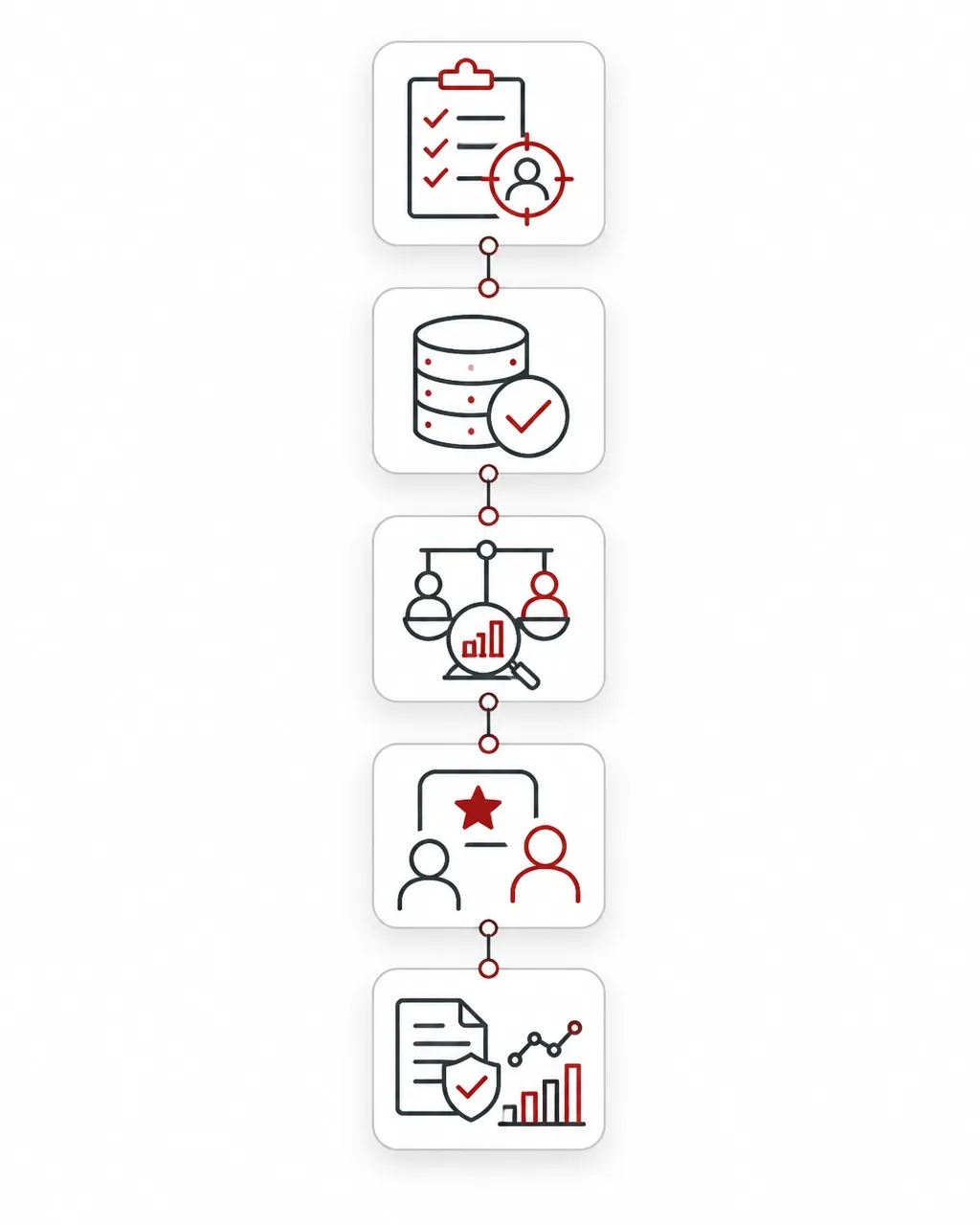
Step 1: Define job-related criteria before screening begins
AI tools are only as defensible as the criteria they apply.
Before using automated screening, create a written profile of the role. Separate essential qualifications from preferred qualifications. Tie each requirement to an actual business need.
For example, an attorney role may require bar admission, practice-area experience, and demonstrated legal research capability. A paralegal or legal assistant role may require litigation support experience, document management proficiency, and familiarity with court filing procedures.
Avoid vague criteria such as:
- “Cultural fit”
- “Executive presence”
- “High energy”
- “Uninterrupted career progression”
- “Recent graduate”
- “Ideal personality”
These terms can invite subjective judgments and create unnecessary risk. They may also operate as proxies for age, disability, race, sex, or other protected characteristics.
A premier hiring process starts with a structured, job-related scorecard. Every criterion should have a documented rationale. Every criterion should be reviewed for necessity.
Step 2: Audit the data and model inputs
Screening systems may evaluate more than a résumé’s relevant experience. They may also analyze employment history, language patterns, assessments, online activity, response timing, location, or other data points.
That creates a critical question: What is the system actually using to make recommendations?
Employers and staffing partners should request clear information from vendors about:
- Data sources and collection practices
- Variables used in scoring or ranking
- Training data and validation methods
- Model updates and change controls
- Protected-class testing
- Disability and accessibility considerations
- Human override capabilities
- Data retention and audit-log availability
Special attention is necessary for variables that may act as proxies. Employment gaps, for example, may reflect disability-related leave, caregiving, military service, pregnancy, economic disruption, or other circumstances unrelated to job performance.
That does not mean employment history can never be considered. It means companies should evaluate whether the criterion is necessary, consistently applied, and connected to the requirements of the role.
For legal employers and organizations managing high-volume legal hiring, data governance should be part of the vendor-selection process: not an afterthought after a complaint arises.
Step 3: Test for disparate impact before deployment
A tool can produce biased results without using protected characteristics directly.
That is why pre-deployment testing matters. Employers should assess whether the screening process disproportionately advances or rejects candidates across relevant demographic groups. Testing should cover the full hiring workflow, including sourcing, résumé review, assessments, ranking, interview selection, and rejection.
A strong validation program should include:
- Baseline selection-rate analysis
- Comparison of outcomes across protected groups
- Review of false negatives and false positives
- Testing of disability-related scenarios
- Periodic revalidation after model or workflow changes
The objective is not to guarantee identical outcomes. The objective is to identify unexplained disparities and determine whether the tool is producing job-related, business-necessary results.
If a system produces a material disparity, pause deployment. Investigate the cause. Remove unnecessary variables. Adjust the workflow. Document the decision.
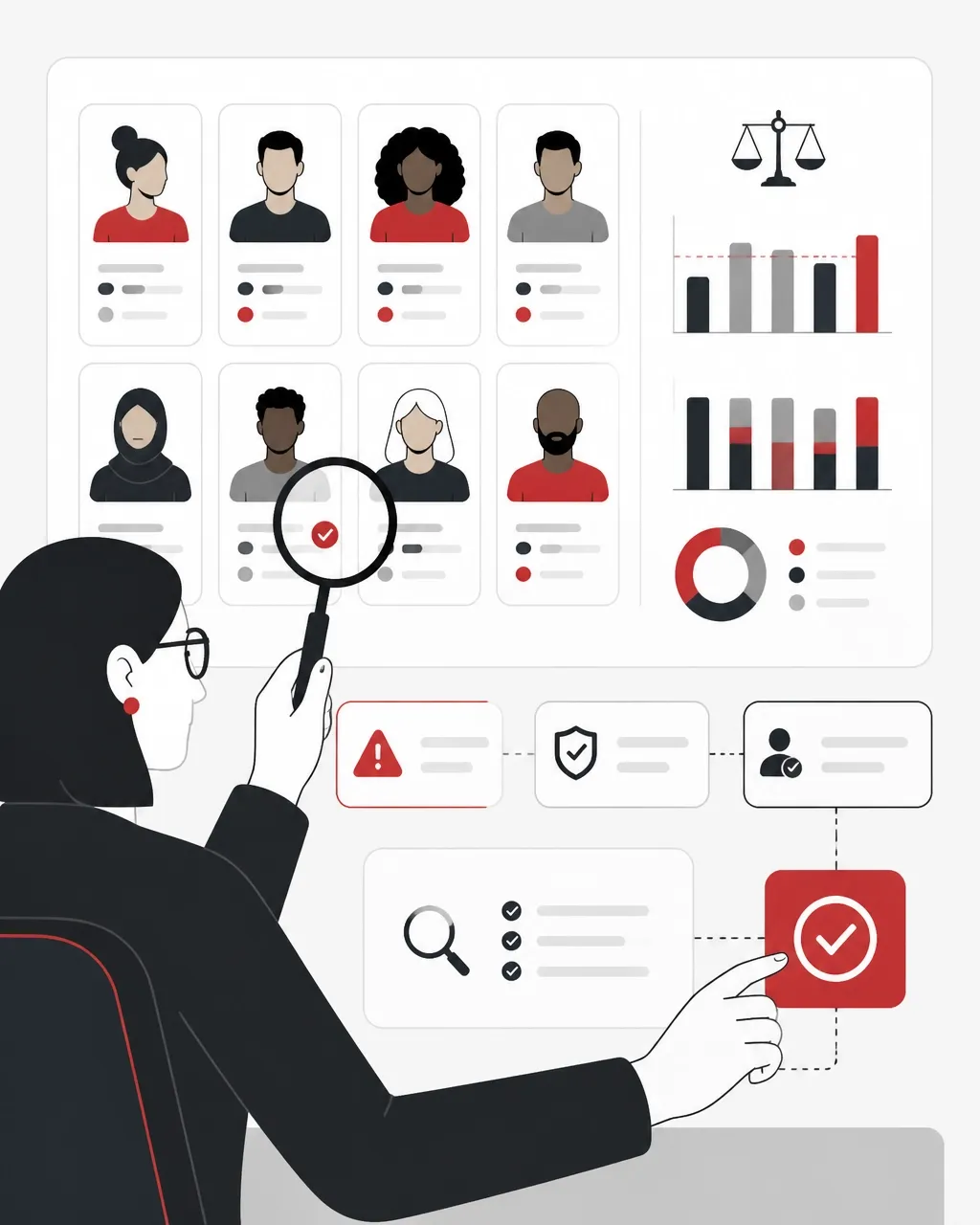
Step 4: Keep qualified human reviewers in the process
Automation should support professional judgment. It should not quietly replace it.
A human reviewer should be able to examine candidates who are screened out, challenge an automated recommendation, and correct inaccurate or incomplete information. Candidates should not be rejected solely because an opaque score falls below an internal threshold.
Human review is especially important when:
- A candidate requests an accommodation
- A résumé contains an employment gap
- Work history is nontraditional
- Credentials are difficult for the system to interpret
- A candidate’s experience is highly specialized
- The screening result conflicts with the recruiter’s assessment
For law firms and corporate legal departments, this principle is especially relevant. Legal talent often has nonlinear career paths. Attorneys may move between practice areas. Paralegals and legal assistants may step away from full-time employment for education, caregiving, or health-related recovery.
A qualified human reviewer can distinguish a legitimate qualification issue from an automated assumption. That distinction protects both the candidate experience and the employer’s hiring objectives.
Step 5: Document decisions and monitor continuously
Compliance requires more than selecting a tool and conducting one initial audit.
Create a documented governance process covering:
- Who approved the screening tool
- Which roles and locations use it
- Which criteria are evaluated
- How adverse-impact testing is performed
- Who reviews complaints and accommodations
- How human overrides are recorded
- When the vendor must provide updated technical information
- When the tool will be suspended or reevaluated
Maintain records of candidate evaluations, reviewer decisions, model changes, and validation results. Documentation can demonstrate that the organization used a deliberate, structured, and job-related process.
Monitoring should also account for geographic risk. The Mobley ruling suggests that a California-based vendor’s conduct may create FEHA exposure even when applicants and positions are outside California. Companies should therefore understand where a vendor designs, develops, maintains, and operates its tools.
This is a shared responsibility. Employers need vendor due diligence. Vendors need transparent controls. Legal staffing partners need disciplined recruiting workflows.
The role of a compliant talent partner
The ruling does not require companies to abandon technology. It requires them to use technology with greater discipline.
A sophisticated staffing partner can help legal employers build a balanced process that combines structured qualification criteria, recruiter expertise, documented candidate evaluation, and appropriate technology controls.
At Blossom Human Resources, our Talent Acquisition Specialists go beyond simple résumé sorting. We build sustainable talent pipelines and align candidates with each client’s culture, hiring demands, and strategic goals.
We support law firms and corporate legal departments hiring attorneys, including lateral partners, litigation associates, and in-house counsel, as well as legal support staff such as paralegals, legal assistants, docketing clerks, billing specialists, and office managers.
For employers seeking support from legal staffing agencies, attorney recruitment agencies, and proven legal talent acquisition partners, a structured human review process is essential.
Move from automated screening to accountable hiring
The Mobley v. Workday ruling is a timely warning for any organization using AI in recruitment:
- Neutral inputs can create discriminatory effects.
- Vendors may face direct liability for employment-related conduct.
- California-based design and operations may have broader legal consequences.
- Human oversight and documentation are essential.
- Proxy discrimination theories deserve specific attention.
The highest-performing organizations will not treat compliance as a barrier to innovation. They will treat it as a requirement for building reliable, defensible, and high-quality hiring systems.
If your organization is reviewing its AI screening process or needs a premier staffing partner for specialized hiring, contact Blossom Human Resources to discuss your workforce needs.